.png)
Thank You Notes: The Cornerstone of Donor Stewardship and Cultivating Gratitude in Higher Education
Introduction: Beyond a Receipt – The Power of Genuine Appreciation
At Awarded, we're fortunate to facilitate the transition from new philanthropic gifts to real world, life changing impact. Every day we collect stories from students of all socioeconomic backgrounds, all genders and ethnicities, and all different types of career and worldly aspirations, and our software helps bridge those students to the donors that want to see those dreams get realized. After partnering with hundreds of university financial aid and donor relations teams, we're sharing our thoughts on why the "thank you note" (as it's conventionally called) plays such a large role in effective donor stewardship.
We don't see these notes as a courtesy; they're powerful catalysts for long term relationships and the purest demonstration of genuine gratitude. We'll explore why mastering the art of expressing thanks is not merely a best practice, but a strategic imperative for any institution committed to long-term donor engagement and sustained philanthropic support.
We'll touch on:
- The psychological underpinnings of gratitude
- How to integrate thank you notes strategically into your organization's donor journey
- The best practices we've collected across top university partners for crafting impactful messages, and
- How to tailor appreciation for diverse donor segments
When institutions treat thank you notes as a thoughtful and important task instead of just a duty, they can build stronger connections. They can encourage future giving. They can also strengthen their place in the hearts and minds of their most valued supporters.
The Critical Role of Gratitude in Higher Education Philanthropy
Setting the Stage: Why Thank You Notes are More Than a Courtesy
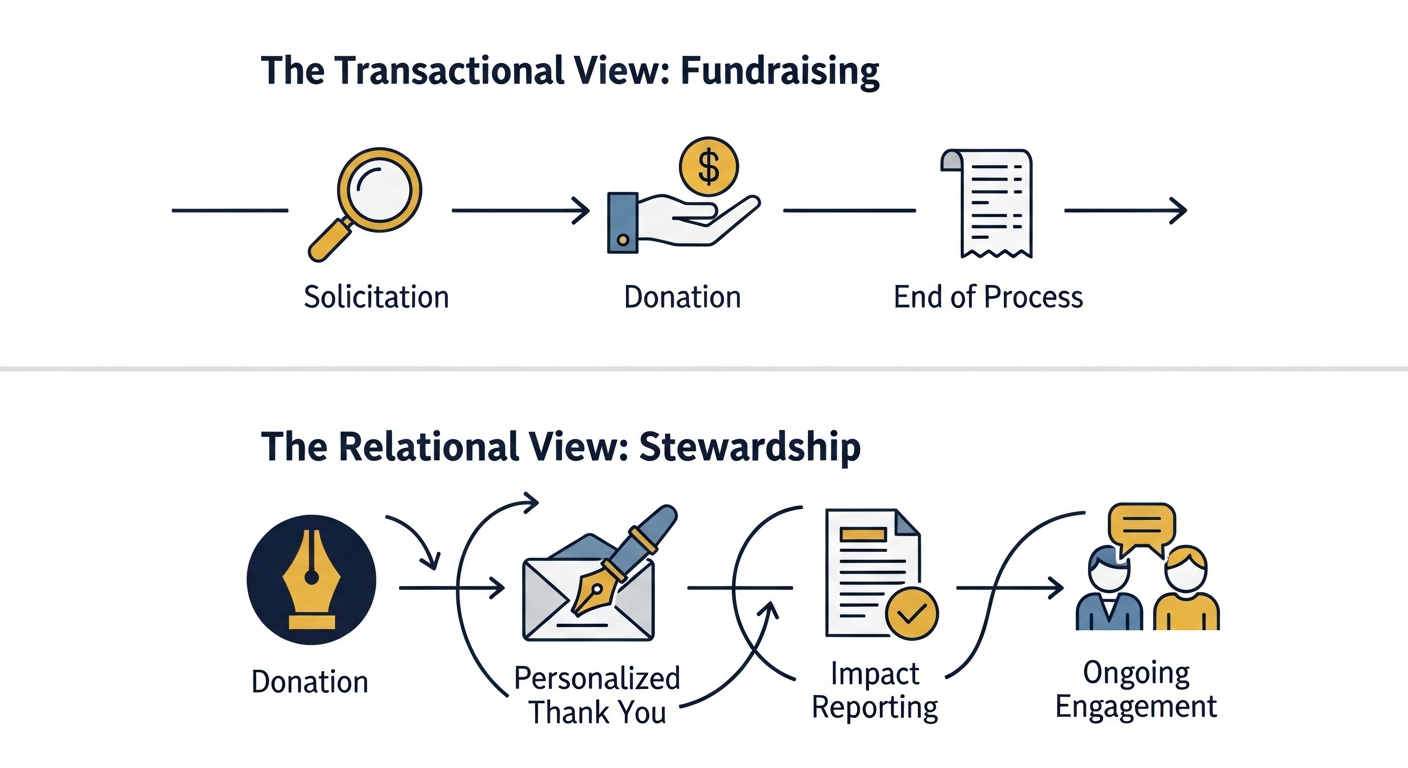
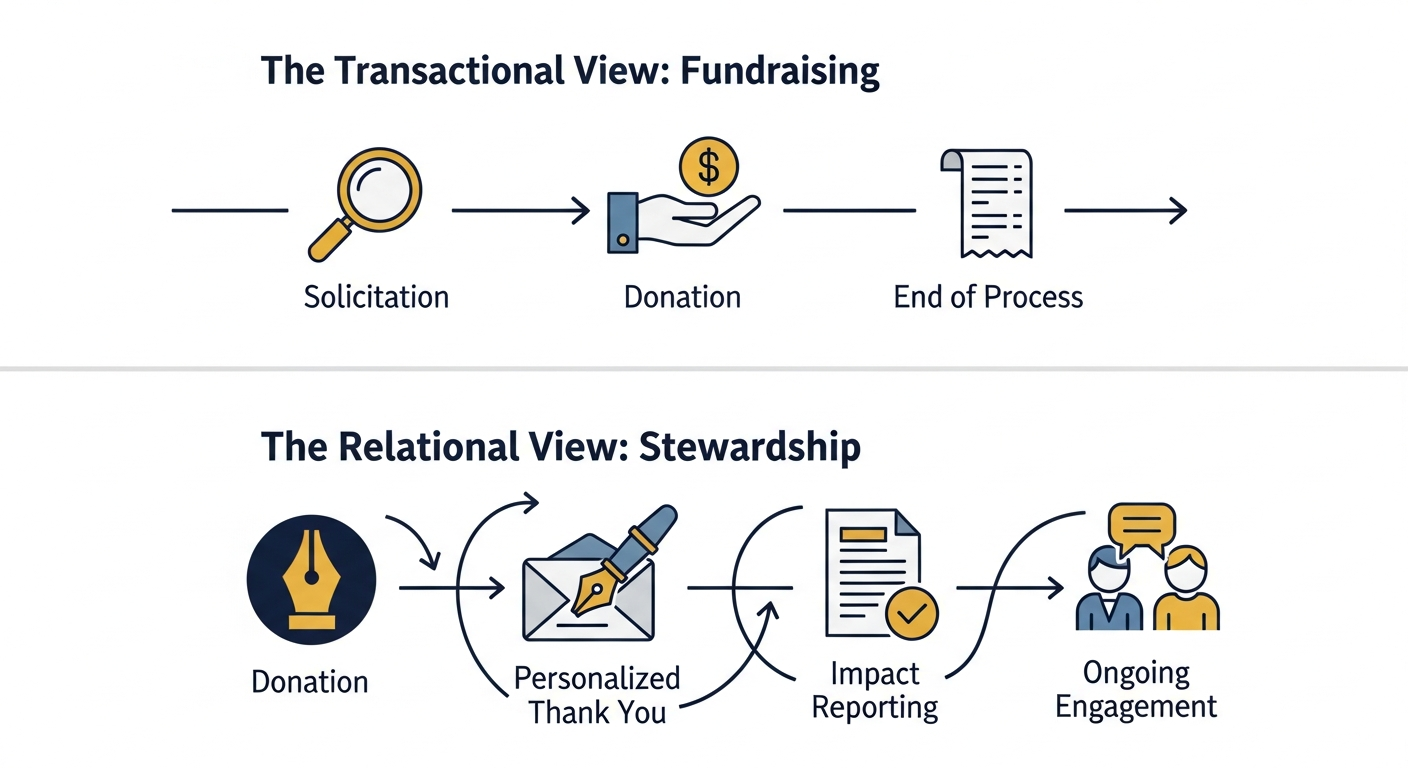
A donation can be viewed as the end of a transaction or the beginning of a relationship. The stewardship cycle begins with gratitude.
The actual receipt of a philanthropic gift often marks the end of a fundraising effort but should signify the beginning of a deeper donor relations journey. In higher education, where relationships are built on shared values, aspirations, and a commitment to future generations, authentic appreciation isn't just polite; it’s foundational. The sheer scale of philanthropic gifts to American colleges and universities, totaling $61.5 billion in fiscal year 2024 (Forbes, 2025), shows the reliance on private support (especially as federal funding support is less predictable than ever). It's our duty to nurture these relationships, and gratitude is our bedrock to do so.
The "Why": Beyond Obligation – The Psychology of Gratitude in Donor Relations
Understanding the Donor Experience: The Emotional Impact of Giving
Donating to higher education is rarely a purely transactional act. Donors are motivated by a desire to make a tangible difference, to invest in knowledge, to support students, faculty, or research that aligns with their values. They often have a deep emotional connection to the institution, perhaps as alumni, parents, or community members. Acknowledging this emotional investment with genuine appreciation validates their decision and reinforces the positive feelings associated with their act of generosity. Understanding this intrinsic motivation is key to crafting messages that resonate. The feeling of contributing to something larger than oneself is powerful, and a well-expressed thank you note amplifies this positive emotional response.
If you've ever received an unexpected or particularly thoughtful note of appreciation from a colleague, a loved one, or even from someone you interact with only from afar - these notes can stay with you (mentally and sometimes physically!) for many years. These are meaningful tokens and markers of the good you're doing in the world, and we want to facilitate those moments for all of our generous supporters and stakeholders.
The Reciprocity Principle: How Gratitude Inspires Future Philanthropy
The psychological principle of reciprocity suggests that when we receive something, we feel compelled to give back. This applies powerfully to philanthropy. A sincere expression of thanks not only acknowledges past generosity but also creates a positive emotional climate that encourages future giving. When donors feel their contributions are seen and appreciated, they are more inclined to continue their support. The simple act of thanking can be a powerful driver of repeat donations and increased fundraising success.
Cultivating a Culture of Appreciation: Beyond Institutional Needs to Shared Values
Effective gratitude extends beyond simply acknowledging financial contributions. It involves recognizing the shared values that bring donors and institutions together. When a thank you note highlights how a donor's gift directly supports the institution's mission and values—whether it's fostering innovation, empowering students, or advancing critical research—it reinforces that shared purpose. This cultivates an internal sense of appreciation within the institution itself, impacting staff and faculty and fostering a more donor-centric environment. This approach moves the focus from the institution's needs to the donor's impact and shared aspirations.
The Long-Term ROI: From Donor Recognition to Sustained Donor Engagement
The return on investment (ROI) of well-executed thank you notes extends far beyond immediate acknowledgment. It directly contributes to donor retention, a critical (although still undervalued) metric in higher education advancement. When donors receive a thank you note, donor retention can increase by 39% (Quality Thank You Notes Can Improve Donor Retention, 2022). This statistic starkly illustrates the financial impact of thoughtful appreciation. In fact, the average first-year donor retention rate across the nonprofit sector hovers around 15-20%, indicating that 80-85% of first-time donors do not give again (How One Simple Change Transformed a Nonprofit's Donor Retention from 6% to 22%, 2025). Effective stewardship, with thank you notes as a key tool, is essential to combat this trend and foster sustained donor engagement.
Strategic Stewardship: Integrating Thank You Notes into the Donor Journey
Defining Strategic Stewardship and Its Pillars in Higher Education Advancement
Strategic stewardship is a proactive, planned approach to nurturing donor relationships beyond the initial gift. It's about transforming donors from one-time supporters to life-long advocates. Its pillars include consistent, personalized communication, demonstrations of impact, and a communication strategy that ensures donors feel valued and understood.
Thank You Notes as a Foundational Element of Donor Stewardship and Relationship Management
Within the framework of strategic stewardship, thank you notes serve as a non-negotiable, foundational element. They are often the first official communication a donor receives post-gift and set the tone for the entire relationship. A well-crafted thank you note is more than just a thank you; it's a statement about how the institution values its supporters. It directly enhances donor relations and is a key tactic in effective relationship management, signaling respect and gratitude.
Mapping the Donor Journey: Key Touchpoints for Expressing Gratitude
The donor journey is not a linear path but a series of interactions and evolving relationships. Thank you notes should be strategically placed at key touchpoints. Institutions typically include the following markers in their stewardship plans:
- Immediate Post-Gift: The initial, prompt acknowledgment.
- After Impact Reporting: Reinforcing the action of their gift by showing where it went.
- During Campaigns: Sustaining momentum by reiterating appreciation for ongoing commitment.
- Anniversaries: Marking milestones of their support.
- Special Occasions: Birthdays, holidays, or personal connections.
- Post-Event Engagement: Thanking attendees, volunteers, and sponsors.
The Role of Communication and Transparency in Reinforcing Impact
Effective thank you notes should not exist in isolation but should complement broader communication strategies, including formal impact reporting. These formal reports may provide detailed data, and a personalized thank you complements with more immediate and human connection to that impact. For instance, a note mentioning a specific student scholarship funded by the gift, or a piece of research enabled by their contribution, makes the impact tangible. Transparency about how funds are used, conveyed through both formal reports and informal thank you messages, builds trust and assures donors that their actions have meaningful consequences and truly advance the institution's goals.
Measuring the Indirect ROI: Connecting Gratitude to Retention and Growth
While the direct financial ROI of a thank you note is hard to quantify, its indirect impact is substantial. Studies have seen 39% increase in donor retention (Quality Thank You Notes Can Improve Donor Retention, 2022). Furthermore, organizations that use personalized messaging see a 27% higher donor retention rate compared to those that send generic messages (Donor Engagement and Behavior: How must nonprofits engage with donors in 2025?, 2024). By fostering strong relationships through gratitude, institutions can cultivate a base of loyal donors, increase the likelihood of future gifts, and ultimately drive institutional growth. Analyzing donor data can help identify opportunities for impactful stewardship, potentially leading to an approximate 30-35 percent increase in giving rates at the individual donor level (CASE.org, 2018).
Crafting the Perfect Thank You Note: Best Practices for Higher Education Development
Personalization is Paramount: Beyond Generic Mail Merges to Authentic Voices
The most effective thank you notes move beyond simple mail merges. Technology is great, managing large donor databases would be impossible without it. But true personalization requires understanding the donor's motivations, interests, and connection to the institution. For example, imagine a dedicated alumnus who has consistently supported the football program. A thank you note for a recent gift to that program should specifically mention her passion and the impact her generosity has on the team, rather than offering a generic message about institutional advancement - and certainly not about the library or perhaps the new engineering building. This tailored approach demonstrates that the institution sees the donor as an individual, not just another number.
Timeliness: Seizing the Moment of Impact for Maximum Effect
Promptness is crucial. The ideal time to send a thank you is as soon as possible after the gift is received and/or spent. The donor's positive feelings are strongest immediately following their decision to give. Delays can diminish the emotional impact and suggest a lack of urgency or appreciation. Seizing this moment allows the thank you note to powerfully reinforce the donor's positive experience and connect their action to the institution's mission at the peak of their engagement.
The Power of Specificity: Detailing the Impact of the Gift (Storytelling in Action)
Vague acknowledgments are incredibly forgettable. Specificity transforms a thank you note into a compelling piece of impact reporting. Instead of stating "your gift helps students," specify "because of you, our undergraduate biology students now have essential lab equipment, allowing them to conduct cutting-edge research to address declining crop yields in rural Alabama [ + video testimonial link from a student ]." When possible, use brief anecdotes or stories that illustrate the direct outcome of the donor's contribution. This makes their philanthropy feel real and underscores the difference they are making.
Tone and Voice: Balancing Professionalism with Warmth and Institutional Pride
The tone of a thank you note should reflect the institution's identity while remaining warm and personal. It needs to be professional enough to represent the institution accurately but warm enough to convey genuine appreciation. This often means striking a balance between formal acknowledgments and authentic expressions of gratitude. Conveying institutional pride—pride in students, faculty, and the mission—can also resonate deeply with donors who share that pride.
Involving Key Stakeholders: From Students and Faculty to Deans and Presidents
The most impactful thank you notes involve individuals directly connected to the impact of the gift. A note signed by a grateful student, a faculty member whose research was enabled, or the dean of the relevant school adds layers of authenticity and impact. This demonstrates that the appreciation comes not just from the university advancement office but from across the institution, reinforcing the breadth of the donor's contribution.
Tailoring Thank You Notes for Diverse Donor Segments
Annual Fund Donors: Building a Broad Base of Loyalty and Consistent Support
Donors to the annual fund often represent a broad base of institutional supporters. For this segment, thank you notes should focus on reinforcing the collective impact of their consistent contributions. Highlighting how cumulative gifts provide essential operating support for scholarships, departmental programs, or student life can be very effective. The goal is to make them feel like valued members of a community whose regular support makes a significant difference, fostering loyalty that encourages continued giving.
Major Gift Donors: Deepening High-Value Relationships Through Personalized Communication
Major gift donors require a more personalized and in-depth approach. Their contributions often have transformative impact, and their thank you notes should reflect this. These messages should be highly customized, acknowledging their specific interests and the significant role their gift plays. A handwritten note from a senior leader, perhaps accompanied by a personal follow-up conversation, can be highly effective. The focus is on acknowledging their strategic partnership and deep commitment to the institution's vision.
Legacy & Planned Giving Donors: Honoring Enduring Impact and Long-Term Commitments
Donors who include the institution in their estate plans are making a profound statement of enduring commitment. Thank you notes for these individuals should honor their foresight and long-term vision. Acknowledging their legacy, the lasting impact they are creating for future generations, and the trust they place in the institution is paramount. These notes can also serve as gentle reminders of their planned gift and reinforce their connection to the institution's future.
Corporate & Foundation Partners: Professional Gratitude for Strategic Alliances
Gifts from corporations and foundations are often the result of strategic alliances and shared objectives. Thank you notes to these partners should maintain a professional tone, emphasizing the alignment of their corporate social responsibility or foundation mission with the institution's goals. Highlighting the mutual benefits and the specific impact achieved through the partnership is crucial. These notes are part of a larger strategy for maintaining robust corporate and foundation relations.
Alumni Engagement: Rekindling Lifelong Connections and Inspiring Continued Involvement
For alumni, thank you notes are a powerful tool for rekindling lifelong connections and encouraging continued involvement. Beyond simply thanking them for a gift, the message can serve as an invitation to re-engage with the alumni community. Highlighting how their support strengthens the alumni network, provides opportunities for current students, or advances the university's reputation can resonate deeply. These notes can be a gateway to further donor engagement and active participation.
Integrating Thank You Notes into Fundraising Campaigns and Initiatives
Capital and Endowment Campaigns: Sustaining Momentum and Reinforcing Commitment
During major capital or endowment campaigns, thank you notes play a vital role in sustaining momentum and reinforcing donor commitment. As gifts are received, prompt and personalized acknowledgments assure donors that their contributions are making a difference and are deeply appreciated. These notes can also subtly remind donors of the campaign's overall goals and their individual part in achieving them, fostering a sense of shared accomplishment and encouraging continued support throughout the campaign lifecycle.
Fundraising Galas and Special Events: Comprehensive Gratitude for Participants and Sponsors
Events, whether galas, auctions, or recognition ceremonies, generate significant goodwill and philanthropic actions. Thank you notes should extend appreciation not only to those who made financial contributions but also to sponsors, attendees, volunteers, and honorees. A comprehensive approach to gratitude post-event ensures that all stakeholders feel recognized for their contribution to the event's success and the institution's mission, fostering positive associations with future events.
Post-Campaign Follow-Up: Re-engaging and Cultivating Donors for Future Opportunities
The conclusion of a campaign isn't an endpoint for stewardship - it's where it begins. Post-campaign thank you notes are an opportunity to reinforce the impact achieved and to thank donors for their crucial role. They also serve as a gentle segue to discuss future opportunities for engagement and philanthropy, leveraging the goodwill generated during the campaign to cultivate sustained donor engagement and build a pipeline for future initiatives.
The Role of Notes in Targeted Appeals and Special Project Funding
Thank you notes are also effective when integrated into targeted appeals or when seeking funding for specific projects. Acknowledge a donor's previous support for a similar initiative before presenting a new appeal. This reinforces their connection to the cause and demonstrates that their past actions are remembered. Similarly, after a special project is funded, a thank you note detailing the project's progress and impact can be a powerful tool for donor cultivation and stewardship.
Modern Approaches and Overcoming Challenges in Thank You Note Execution
Blending Digital and Traditional: The Hybrid Approach to Gratitude
The most effective communication strategies often blend digital and traditional methods. While emails are efficient for rapid acknowledgment, a handwritten note or a personalized video message can have a far greater impact for significant gifts or key donor relations. A thank you email can be sent immediately, followed by a more personal touch later. This hybrid approach leverages the strengths of both channels to create a comprehensive and impactful donor experience.
Leveraging CRM Operations and Donor Behaviors for Personalization at Scale
Sophisticated CRM systems are indispensable for managing donor relations and enabling personalization at scale. By analyzing donor data—gift history, engagement patterns, expressed interests, event attendance, and other behavior-based signals—institutions can identify specific opportunities for tailored thank you messages. For instance, a CRM might flag a donor who previously expressed interest in a particular faculty member’s research, allowing for a thank you note that directly references that connection. This data-driven approach ensures that even at scale, the thank you feels personal and relevant.
Overcoming Volume: Strategies for Managing Large Donor Bases Efficiently
Managing thank you notes for thousands of donors presents a significant logistical challenge. Institutions can overcome this by implementing tiered stewardship strategies. This means prioritizing personalized, high-touch acknowledgments for major donors while employing efficient, but still thoughtful, methods for annual fund donors. Using technology for timely automated initial acknowledgments, alongside volunteer programs for handwritten notes, can help manage volume while maintaining quality and ensuring every gift receives appropriate recognition.
Ensuring Consistency and Quality Across Departments and Teams
Maintaining consistent quality in thank you notes across different departments and teams can be difficult. Establishing clear guidelines, providing training on best practices, and centralizing some aspects of communication can help. Encouraging a shared understanding of the importance of donor stewardship and providing templates or resources can ensure that every note, regardless of sender, reflects the institution's commitment to gratitude. This prevents institutional inertia from creating a "block" in consistent, high-quality appreciation.
The Challenge of the "Block" and Finding Unique Ways to Express Thanks
The "block"—whether writer's block or institutional inertia—can hinder the consistent delivery of meaningful thank you notes. Institutions can overcome this by fostering a culture of creativity and continuous improvement. This might involve brainstorming sessions to generate fresh ideas, encouraging staff to share successful thank you examples, or even looking outside higher education for inspiration. Instead of using only generic templates that lead to boring examples, schools should find unique and memorable ways to say thanks. These should match their identity and donor relationships.
Cultivating an Institutional Culture of Gratitude in Higher Education
Beyond Donors: Extending Gratitude to Staff, Faculty, and Volunteers
An institutional culture of gratitude is not solely focused outward on donors. It thrives when appreciation is also extended internally to staff, faculty, and volunteers. Recognizing the hard work and dedication of those who contribute to the institution's mission fosters a positive internal environment. This internal culture of appreciation can then naturally permeate outward, enhancing the sincerity and authenticity of donor communications.
The Impact of an Internal Gratitude Mindset on Recruitment, Retention, and Growth
A workplace where gratitude is a core value tends to have higher employee morale, leading to better recruitment and retention of talented staff and faculty. When the internal community feels valued, they are better equipped to provide exceptional experiences for donors. This positive cycle reinforces the institution’s mission and contributes to overall growth and success.
Leadership's Role in Championing a Culture of Appreciation
Leadership plays a pivotal role in championing a culture of appreciation. When presidents, deans, and senior administrators actively participate in expressing gratitude—whether by signing notes, making thank you calls, or publicly acknowledging supporters—it sends a powerful message. Their involvement underscores the strategic importance of donor stewardship and reinforces that gratitude is a core institutional value, not just a task for the development office.
Fostering a "Thank You" Culture as a Core Value of the Institution
Ultimately, weaving thank you notes into the fabric of higher education is about fostering a genuine "thank you" culture as a core institutional value. It’s about recognizing that institutional advancement is a partnership and that expressing sincere appreciation is an ongoing commitment. This cultural shift ensures that gratitude becomes an integral part of every interaction, transforming how the institution engages with its supporters and solidifying its reputation as a place that deeply values its community.
Conclusion: The Enduring Value of a Well-Written Thank You
Higher education giving continues to show it is strong and important. It reached $87.69 billion in 2023, according to Redpath Consulting Group (2024). Donor retention remains a constant challenge. Between 80% and 85% of first-time donors do not give again, according to a 2025 report. This shows the urgent need for well-organized and systematic stewardship practices. When we pursue true strategic stewardship and embrace the psychology of gratitude to tailoring messages for diverse donor segments, we move beyond transactional exchanges and start to build lasting partnerships.
The call to action is clear: invest in authentic gratitude. Equip your teams with the knowledge and tools to move beyond generic acknowledgments and overcome the common "block" in expressing thanks. Leverage technology wisely, blend digital and traditional methods, and most importantly, foster an institutional culture where appreciation is not an afterthought but a deeply ingrained value. By making the well-penned thank you note the cornerstone of your donor experience, you invest in relationships that yield immeasurable returns, ensuring the continued vitality and success of your institution for generations to come.
Transform your scholarship awarding & stewardship with Awarded
Attract & retain more students and donors starting today.
.png)