.png)
Thank You Notes or Student Showcases?
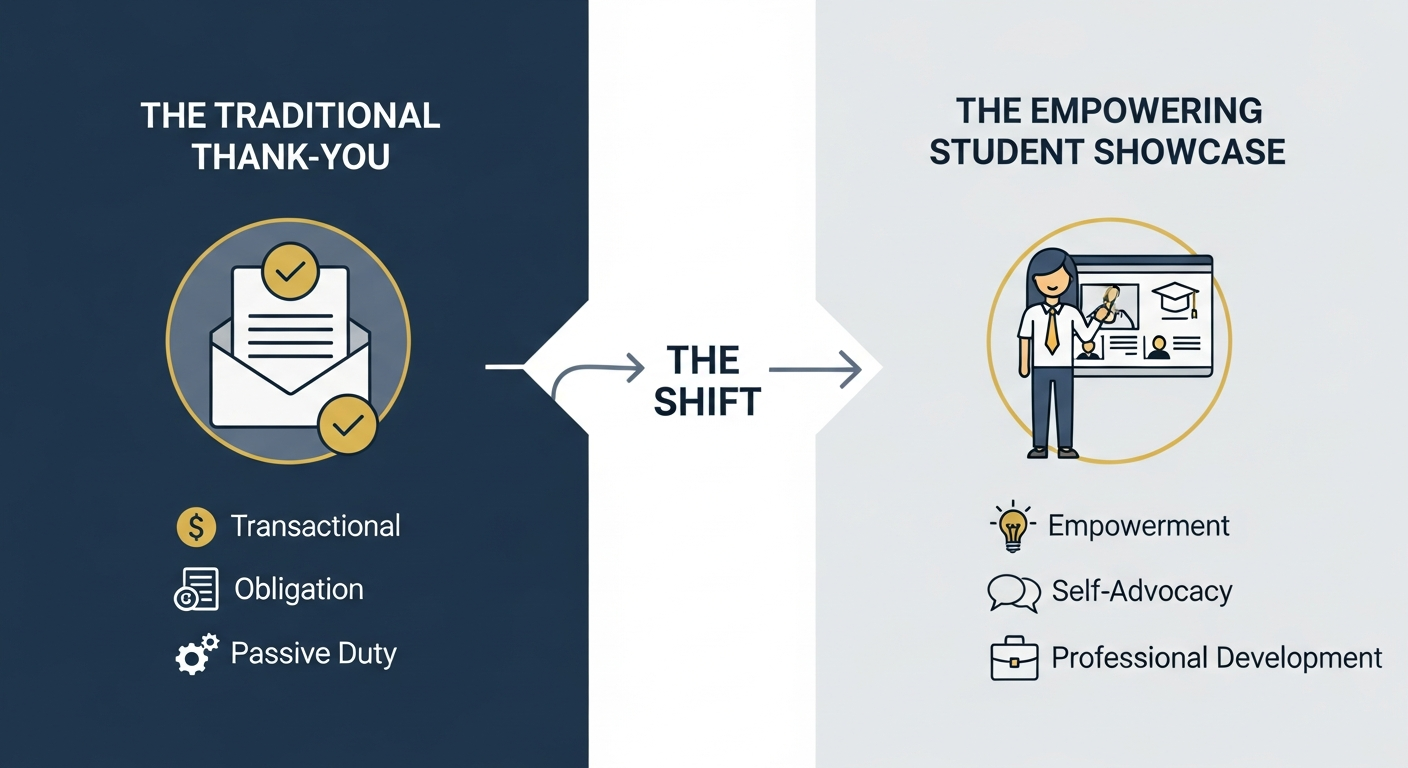
Why the Shift?
As donor relations and advancement professionals, we've used thank you notes for decades to express appreciation from students to donors as a key part of our stewardship strategies. However, we must recognize evolving preferences and perceptions of both stakeholders as financial aid and advancement offices have started to see declining engagement rates and quality of notes from students in recent years.
This article explores why some institutions are evolving how they collect and present their stories of impact to meet these new realities.
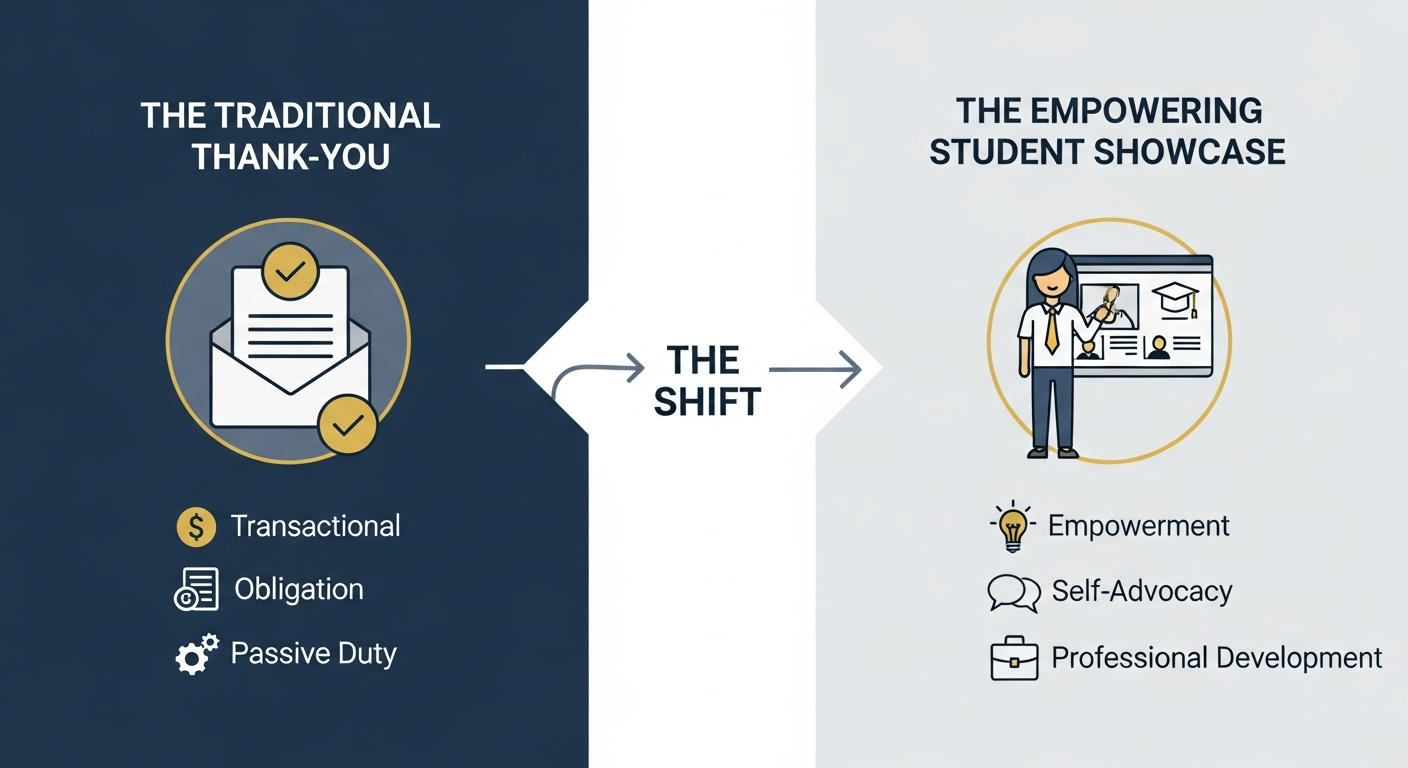
The traditional thank-you note serves a valuable purpose, but it often exists at the intersection of obligation and a desire to acknowledge support. Some institutions even require the notes, or students risk their scholarships being withheld from them. Accordingly for many students the act of writing a thank-you letter gets complicated, driven by institutional requirements rather than genuine, articulated desire.
We see points on both sides. Many advancement pros think - "What's the big problem? If students are receiving money, surely it's not too much to ask for a small note of gratitude?" - and that seems appropriate. But we also need to be thoughtful about how we request these notes and why they're being asked to complete them.
Collecting student stories should be no more transactional than collecting donations. Such a transactional approach misses so much about the heart and soul of university advancement. We want students to be empowered with scholarships and resources that donors are providing; we want students to feel empowered as they share their stories and dreams with donors which we believe will inspire future gifts and support. Anything that risks spoiling that will hurt the story quality & student participation rate, and will ultimately dilute the power of the story being shared with the donor.
Naming: Thank You's vs. Showcases
Universities are shifting away from traditional "thank you notes" toward "student showcases" or "gratitude stories" for a few practical reasons. The new terminology better reflects what's actually being requested. We're not looking for brief, casual notes but rather substantive narratives about the student's background, academic journey, and how the scholarship enables their goals. This reframing helps students understand they should provide meaningful content that donors find rewarding to read, rather than a simple "thanks for the money."
It also reduces the transactional feeling of the exchange; "showcase" and "story" emphasize the student sharing their authentic experience rather than fulfilling an obligation to flatter a benefactor. For advancement offices, this language shift encourages submissions that can double as fundraising and promotional materials, demonstrating scholarship impact to prospective donors while making current supporters feel genuinely connected to the students they're helping.
What's The Difference?
Clients of Awarded that are pioneering a new approach to student showcases include Colorado State University and Johns Hopkins University. These institutions are shifting the industry in a new direction, and their markers include student-centric approaches including:
- Showcases are optional, not mandatory -> no scholarship funds will be withheld if a student response is late or not provided
- Questions and prompts are personal, not cookie-cutter -> questions like "What makes you proud to attend [institution]" or even "what's your favorite restaurant in town" imbue responses with personality that also increase the participation rate and quality of student responses
- Advancement seeks to build relationships early and often with thoughtful communication: students are notified well ahead of deadlines with personalized messages via Awarded's automated email and text message capabilities with an explanation of what gratitude is all about and why the student's response can create additional opportunities for students like them in future classes
Transform your scholarship awarding & stewardship with Awarded
Attract & retain more students and donors starting today.
.png)